Beneath the Surface
Most tree problems announce themselves above ground. Leaves thin out. Branches die back. The canopy looks uneven. What often goes unnoticed is the real source of trouble below the soil.
Roots support the entire structure of a tree. When they are damaged, stressed, or confined, the effects can threaten both tree health and nearby property. Understanding underground root problems is an essential part of responsible tree care.
Why Roots Matter More Than You Think
Tree roots anchor the tree, absorb water, and gather nutrients. They also store energy that helps trees survive drought, cold, and injury.
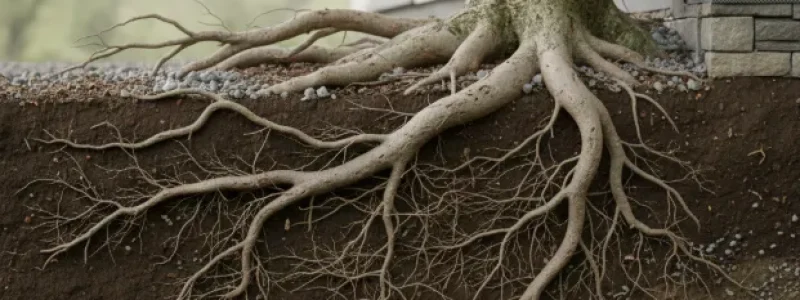
Contrary to popular belief, roots do not grow straight down. Most spread outward just below the soil surface, often extending far beyond the canopy.
Good tree care begins with respecting how roots actually function.
Common Causes of Hidden Root Damage
Root damage often develops slowly and quietly. Several common activities contribute to underground stress.
Construction work is a major cause. Trenching, grading, and heavy equipment compact soil and sever roots. Even small projects can disrupt large portions of a root system.
Soil compaction from foot traffic or vehicles limits oxygen flow. Roots struggle in dense soil and may begin to decline.
Improper watering practices also play a role. Overwatering suffocates roots. Underwatering weakens them.
Tree care failures often start underground.
How Root Problems Show Up Above Ground
Although roots are hidden, trees often send warning signs.
Slow growth is one indicator. Sparse foliage or early leaf drop can follow. Branch dieback may appear uneven or gradual.
In severe cases, trees begin to lean. This is not always due to wind or storms. Root loss on one side can destabilize the entire structure.
Ignoring these signs increases risk.
Root Rot and Soil Conditions
Poor drainage creates conditions for root rot. When soil stays wet, fungal pathogens thrive.
Root rot weakens the structural roots that hold a tree upright. Trees with advanced root rot may fail suddenly, even without strong winds.
Professional tree care evaluations help identify these risks before failure occurs.
The Threat to Property
Damaged roots do not only affect trees. They can threaten surrounding property.
As roots decay or shift, trees lose stability. A falling tree can damage homes, fences, vehicles, and walkways.
Roots may also interfere with foundations, sidewalks, and underground utilities. While roots rarely break solid foundations, they exploit existing cracks and weak points.
Tree care protects both landscapes and structures.
Why DIY Diagnosis Falls Short
Root problems are difficult to assess without training. Digging around roots can cause further damage. Surface inspections only tell part of the story.
Certified arborists use visual cues, soil evaluation, and experience to diagnose underground issues. This approach minimizes harm and leads to accurate conclusions.
Tree care is not guesswork.
Preventing Root Damage Before It Starts
Prevention is one of the most effective tree care strategies.
Avoid disturbing soil near trees whenever possible. Keep heavy equipment away from root zones. Use mulch to protect soil structure and retain moisture.
Water deeply and infrequently rather than shallow daily watering. This encourages healthy root growth.
Healthy roots support long-lived trees.
Managing Existing Root Issues
When root problems are identified early, corrective care may help.
Soil aeration improves oxygen flow. Adjusting irrigation supports recovery. Selective pruning can reduce stress on weakened root systems.
In some cases, removal is the safest option. Trees with severe root damage pose unacceptable risk.
Tree care decisions should always prioritize safety.
Understanding Tree Failure Risk
Trees rarely fail without warning. Root damage lowers the margin of safety.
A tree with compromised roots may survive normal conditions but fail during storms or heavy snow. The danger lies in unpredictability.
Professional risk assessments are a critical part of responsible tree care.
The Role of Local Expertise
Soil type, climate, and tree species influence how roots grow and respond to stress. Local experience matters.
Arbor Plus provides tree care services informed by regional knowledge. Their team understands how local conditions affect root health and stability.
Experience leads to better outcomes.
Long-Term Tree Health Starts Underground
Healthy trees begin with healthy roots. Above-ground care alone is not enough.
Monitoring soil conditions, avoiding unnecessary disturbance, and scheduling regular evaluations support long-term stability.
Tree care is as much about what you cannot see as what you can.
A Strong Foundation Makes All the Difference
Root problems often develop quietly, but their impact can be serious. Addressing issues early protects trees, property, and people.
Thoughtful tree care focuses on prevention, accurate assessment, and informed action.
With proper attention below ground, trees can continue to grow safely and steadily for years to come.