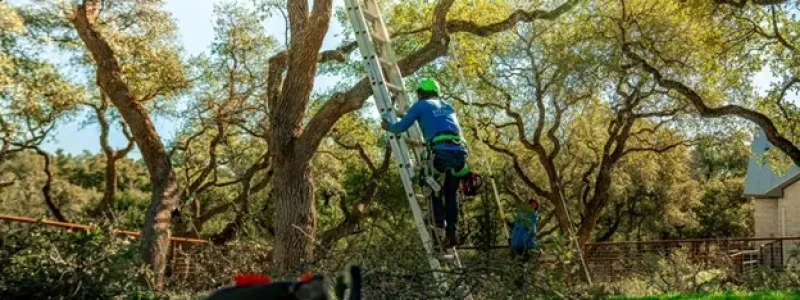
Trees are an important part of apartment communities and homeowners associations. They provide shade, define common areas, improve the appearance of shared spaces, and contribute to a more comfortable outdoor environment. They also require regular care, particularly when many trees are located around buildings, parking areas, sidewalks, playgrounds, and roads.
Tree maintenance for an apartment complex or HOA is different from caring for a few trees around a private home. Property managers and association boards are responsible for larger landscapes with different tree species, varying ages, and a range of site conditions.
A consistent maintenance plan can help property owners identify problems early, manage costs, and keep trees in reasonable condition throughout the year.
Start With a Tree Inventory
A good maintenance program begins with knowing what trees are on the property.
Create an inventory that records the location, species, approximate size, and general condition of each significant tree. The inventory can also identify trees near buildings, parking areas, walkways, playgrounds, and other areas where falling branches could create a concern.
This information gives property managers a clearer picture of the landscape.
It also helps when scheduling pruning, inspections, watering, and other tree care services.
Schedule Regular Tree Inspections
Trees should be inspected regularly rather than only after a storm or when a problem becomes obvious.
An inspection can identify dead branches, damaged limbs, structural weaknesses, decay, pest activity, disease symptoms, and other concerns.
Large trees deserve particular attention when they are close to buildings, parked vehicles, pedestrian areas, or recreational spaces.
A qualified arborist can assess conditions that may be difficult for property managers or residents to recognize.
Regular inspections can also help create a record of tree conditions over time.
Prune Trees According to Their Needs
Pruning is one of the most common forms of tree maintenance for multi-family properties.
Proper pruning can remove dead or damaged branches, improve clearance, and address certain structural concerns. It can also help maintain appropriate separation from buildings, sidewalks, signs, lighting, and utility infrastructure.
However, pruning should have a clear purpose.
Removing excessive amounts of live branches can place unnecessary stress on a tree. Topping or other improper pruning methods may create additional structural problems and weak regrowth.
Apartment complexes and HOAs should establish a pruning schedule based on tree species, age, condition, location, and site requirements.
Pay Attention to High-Traffic Areas
Trees located beside sidewalks, parking lots, entrances, playgrounds, and driveways require particular attention.
Branches that extend into pedestrian paths can interfere with movement. Low limbs may obstruct vehicles or signs. Dead branches over parking areas can become a concern during storms.
Maintenance plans should identify these locations and prioritize them for inspection and appropriate pruning.
Clearance requirements should be considered when maintaining trees near roads, sidewalks, and buildings.
Manage Water Carefully
Water management is especially important in Utah.
Hot, dry periods can increase the water needs of landscape trees. At the same time, irrigation systems in apartment complexes and HOAs can create uneven watering patterns.
Some trees may receive too little water while others receive excessive moisture.
Property managers should monitor irrigation coverage and adjust watering according to weather, soil conditions, tree species, and landscape requirements.
Deep and appropriate watering can support healthy root development and reduce drought stress.
Avoid creating constantly saturated soil around trees. Excess moisture can interfere with root function and contribute to root problems.
Protect Tree Root Zones
Construction, landscaping, vehicles, and routine maintenance can damage tree roots.
Compacted soil can limit the movement of air and water. Excavation for irrigation, utilities, fencing, or landscaping can cut important roots.
Apartment complexes often have limited open space, which makes root protection especially important.
Avoid unnecessary digging near established trees. Keep heavy equipment and stored materials away from important root areas whenever possible.
Before beginning construction or major landscaping work, property managers should consider how the project may affect nearby trees.
Use Mulch Correctly
Mulch can help conserve moisture and moderate soil temperatures around trees.
It can also reduce competition from turf and weeds, which may be useful in common areas.
Mulch should be applied evenly and should not be piled against tree trunks. Excessive mulch around the trunk can keep the bark damp and create conditions that contribute to decay.
A properly maintained mulch area can support better soil conditions while making routine landscape maintenance easier.
Monitor for Pests and Disease
Trees in large residential communities may include many of the same species. If a particular pest or disease affects one tree, nearby trees may also be at risk.
Property managers should watch for unusual leaf discoloration, premature leaf loss, damaged bark, fungal growth, insect activity, dead branches, and changes in normal growth.
The cause should be identified before treatment is selected.
A qualified tree care professional can help determine whether a tree is experiencing pest activity, disease, drought stress, soil problems, or another condition.
Early identification can make tree care more manageable.
Prepare Trees Before Severe Weather
Storm preparation should be part of routine tree maintenance.
Strong winds, heavy snow, and other severe weather can expose structural weaknesses in trees.
Before periods of severe weather, inspect trees for dead branches, hanging limbs, cracks, and other visible problems.
Trees with known structural concerns should receive professional attention.
After a storm, inspect the property for broken branches and damaged trees. Do not approach severely damaged trees or attempt to remove large limbs without appropriate training and equipment.
Maintain Trees Around Buildings
Trees provide valuable shade around apartment buildings, but branches should be monitored as they grow.
Branches that contact roofs, siding, windows, or exterior structures may cause damage or create maintenance problems.
Trees should also be considered when maintaining gutters, exterior lighting, security cameras, signs, and other building features.
Pruning can provide necessary clearance while maintaining an appropriate tree structure.
Keep Residents Informed
Residents and homeowners can affect tree health through everyday activities.
Vehicles parked over exposed roots, improper watering, lawn equipment, unauthorized pruning, and landscaping changes can all create problems.
HOAs and property managers can reduce confusion by providing clear guidelines about tree care and landscaping around common areas.
Residents should also know whom to contact when they notice a damaged branch, diseased tree, irrigation problem, or other concern.
Clear communication helps maintenance issues reach the appropriate person sooner.
Create a Seasonal Maintenance Schedule
Tree care is easier to manage when it is planned throughout the year.
A seasonal schedule might include:
- Winter inspections and storm preparation
- Spring assessment of new growth and tree health
- Summer irrigation monitoring and drought management
- Fall inspection, selective pruning, and preparation for winter
The exact schedule should depend on the tree species and local conditions.
A written maintenance calendar can help property managers coordinate contractors and prevent important tasks from being overlooked.
Keep Maintenance Records
Apartment complexes and HOAs should maintain records of significant tree care work.
Records can include inspection dates, pruning work, storm damage, pest treatments, irrigation adjustments, and recommendations from tree care professionals.
These records help property managers understand how individual trees have changed over time.
They can also make it easier to plan future maintenance and identify recurring problems.
Work With a Qualified Tree Care Professional
Large residential properties often require specialized equipment and knowledge.
Professional tree care can be particularly useful for large trees, difficult pruning, storm-damaged limbs, pest or disease concerns, and trees located near structures or high-traffic areas.
Arbor Plus provides tree care services for properties throughout Utah and can help property managers and HOAs develop practical maintenance plans based on their landscape and existing trees.
A Better Approach to Community Tree Care
Tree maintenance for an apartment complex or HOA works best when it is treated as an ongoing responsibility.
A property does not need to wait for a fallen branch or visibly declining tree before taking action. Regular inspections, appropriate pruning, careful watering, root protection, pest monitoring, and storm preparation can help maintain healthier trees and more orderly common areas.
For property managers and HOA boards in Utah, a consistent maintenance program also makes it easier to plan expenses and address problems before they become larger projects.
Trees are long-term landscape assets. With regular attention and sensible care, they can continue providing shade, character, and value to a residential community for many years.