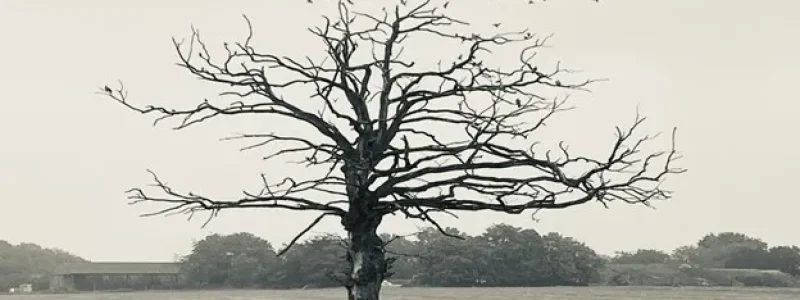
A tree that appears bare or unhealthy is not necessarily dead. Many trees lose their leaves and stop producing visible growth during colder months or periods of seasonal dormancy. Others may show similar signs because they are under stress, suffering from disease, or experiencing damage to their roots or branches.
Knowing the difference between a dormant tree, a declining tree, and a dead tree can help homeowners decide what action to take. This is particularly useful in Utah, where seasonal temperature changes, dry conditions, and different growing environments can affect how trees look throughout the year.
Before removing a tree that appears lifeless, it is worth examining several signs.
Understand Seasonal Dormancy
Dormancy is a natural part of the growth cycle for many trees.
During dormancy, a tree’s visible growth slows considerably. Deciduous trees may lose their leaves, and some species may appear completely inactive.
This does not mean the tree has stopped functioning.
Roots can remain active when soil conditions are suitable, and the tree may be conserving resources until environmental conditions support new growth.
The timing of dormancy varies by tree species and local weather conditions. A tree that appears bare in winter may begin producing buds as temperatures rise in spring.
Understanding the species is therefore an important first step.
Check the Buds
Buds can provide useful clues about whether a tree is alive.
Look closely at branches for healthy, developed buds. Living buds may be firm and show signs of swelling as the growing season approaches.
If buds are present and developing normally, the tree may simply be dormant.
However, a lack of visible buds does not automatically prove that a tree is dead. Some species have less obvious buds, and environmental stress can delay normal growth.
The condition of the branches and bark should also be considered.
Perform a Simple Scratch Test
One common way to check whether a branch contains living tissue is to gently scratch a small area of outer bark.
If the tissue underneath is moist and green, the branch is likely alive.
If the exposed tissue is dry and brown, that particular branch may be dead.
This test should be performed carefully and on small areas. Do not remove large sections of bark from the trunk or major limbs.
It is also useful to test more than one branch. A tree may have some dead branches while other parts remain healthy.
Examine the Bark
The condition of the bark can provide additional information.
Healthy bark varies by species, but it generally remains attached to the tree in a characteristic pattern.
Loose, falling, cracked, or extensively damaged bark can indicate serious problems.
However, bark appearance alone is not enough to determine whether a tree is dead. Some trees naturally shed outer bark, while others develop cracks or surface changes as they mature.
Look for multiple signs rather than relying on one observation.
Look for New Growth
During the growing season, new leaves, shoots, and branch growth are among the clearest signs that a tree is alive.
If a tree produces normal new growth, it is clearly functioning.
Limited growth may indicate stress rather than death.
Drought, root damage, disease, insect activity, soil problems, and severe weather can all reduce growth.
A tree that produces sparse foliage after a difficult season may need closer inspection before a decision is made.
Inspect the Branches
Dead branches often become brittle and break more easily.
Look for branches with no leaves during the growing season, extensive cracking, loose bark, unusual discoloration, or signs of decay.
If every major branch appears dry and brittle, the tree may be dead.
If only certain branches show these signs, the tree may still be alive.
Deadwood should be evaluated carefully, particularly when it is located over sidewalks, driveways, buildings, parking areas, or areas where people gather.
Watch for Fungal Growth
Certain types of fungal growth can be associated with decay.
Mushrooms or fungal structures growing near the base of a tree may indicate decomposition within the roots or lower trunk. However, their presence does not automatically mean that the entire tree is dead.
Some fungi are associated with decaying wood, while others may be present because of conditions in the surrounding soil.
A professional tree inspection can help determine whether fungal growth indicates a significant structural or health concern.
Check for Root Problems
Tree health begins below the ground.
Root damage can cause symptoms throughout the canopy. Construction, soil compaction, changes in drainage, drought, and physical damage can affect roots.
A tree with declining foliage may therefore have a root problem rather than an immediate disease affecting its leaves.
Root problems can be difficult to diagnose from the surface.
If a mature tree has declined suddenly or shows widespread stress, the root zone should be considered as part of the assessment.
Look at the Timing
Timing matters when evaluating a tree.
A deciduous tree without leaves in January may be perfectly healthy. The same tree without leaves during the middle of its normal growing season may require closer attention.
Weather can also affect the timing of new growth.
An unusually cold spring may delay bud development. Drought can cause early leaf drop. Sudden temperature changes can damage new growth.
Compare the tree’s condition with its normal seasonal pattern before deciding that it is dead.
Consider Signs of Disease or Insects
A declining tree may show several symptoms at once.
These can include:
- Discolored or undersized leaves
- Premature leaf drop
- Dead branch tips
- Holes in bark
- Insect activity
- Fungal growth
- Cracked bark
- Reduced annual growth
- Excessive deadwood
These symptoms can have several possible causes.
Disease, insects, environmental stress, and root problems can sometimes produce similar signs. Correct identification is important because the appropriate response depends on the cause.
Do Not Remove a Tree Too Quickly
Removing a large tree is a significant decision.
A tree that looks unhealthy may still have viable tissue and may recover if the underlying problem is addressed.
At the same time, a severely declining tree may present structural concerns that should not be ignored.
Homeowners should consider the tree’s location as well as its health. A declining tree near a house, road, playground, or other occupied area may require more immediate attention than one in an isolated part of the property.
When to Call an Arborist
Some tree problems can be observed by homeowners, but determining whether a large or mature tree is dead can be difficult.
An arborist can evaluate the tree’s branches, trunk, canopy, root zone, and overall structure. Professional assessment can be particularly useful when symptoms are unclear or when the tree is located near structures or areas of regular activity.
Arbor Plus provides professional tree care services in Utah and can help property owners evaluate trees that appear unhealthy, damaged, or potentially hazardous.
Know the Difference Before Taking Action
A dormant tree may look lifeless for part of the year. A dying tree may still have living branches and may respond to appropriate care. A dead tree has no viable living tissue and cannot recover.
The distinction is important because each situation calls for a different response.
Homeowners can look for buds, new growth, healthy tissue beneath the bark, branch condition, and seasonal patterns. They should also consider signs of root problems, disease, pests, and structural damage.
When the condition is uncertain, professional tree assessment can provide a clearer answer.
Give the Tree a Careful Look
Trees change throughout the year, and their appearance can vary significantly between seasons. A bare canopy does not tell the whole story.
Before deciding that a tree is dead, examine its buds, branches, bark, foliage, and growing conditions. Consider recent weather and any changes made around the tree.
For Utah homeowners, careful observation is especially useful because drought and seasonal weather can affect tree health in different ways.
Taking the time to determine what is actually happening can prevent unnecessary tree removal and help identify problems while there is still an opportunity to address them.