Trees add shade, privacy, and character to a property. But sometimes a tree becomes a hazard, a headache, or a hard stop for new construction. A trunk leaning toward a roofline, roots lifting a sidewalk, or storm damage hanging over a parking lot can turn “nice landscaping” into a real risk. That is where Tree Removal Services come in, for homes and for business sites that need safety, access, and clean results.
At Arbor Plus, we approach removal work with a simple goal: take down the tree safely, protect what is around it, and leave the site in good order. If you need to talk through a situation, call 801-485-8733.
When Removal Is the Right Call
Most people do not want to remove a healthy tree. Still, there are clear cases where removal is the responsible choice.
Common residential reasons
- The tree is dead, declining, or hollow, with weak limbs that keep dropping.
- It is leaning after wind or heavy snow, or the root plate has started to lift.
- Branches are over the roof, power lines, a fence, or a neighbor’s yard.
- Roots are damaging a driveway, patio, retaining wall, or sewer line.
- You need clearance for an addition, pool, or new landscaping plan.
Common commercial reasons
- The tree creates liability near sidewalks, entrances, parking stalls, or loading areas.
- Visibility issues near signage, drive lanes, or street corners.
- Storm damage that threatens vehicles, storefronts, or overhead utilities.
- Site changes such as tenant improvements, grading, drainage work, or new builds.
- Ongoing maintenance costs that no longer make sense for the property.
Removal is not a failure. It is often preventive maintenance, the same way you would replace a cracked beam before it breaks.
Safety First, Always
Tree work looks simple until it goes wrong. A tree’s weight distribution can surprise even experienced people, especially with rot, split trunks, or wind-loaded branches. Professional Tree Removal Services focus on controlled movement and predictable results.
A safe removal plan usually considers:
- Drop zone and rigging plan to prevent damage to roofs, fences, and vehicles
- Proximity to utilities including power lines and service drops
- Tree condition such as decay pockets, included bark, or storm fractures
- Access and equipment needs for tight backyards, courtyards, or fenced areas
- Ground conditions like soft soil, slope, or limited space for debris staging
For commercial properties, safety planning also includes pedestrian control, tenant access, and timing that reduces disruption.
Residential Tree Removal That Respects the Property
Homeowners tend to worry about three things: the house, the yard, and the cleanup. Those concerns are valid. Removal work can be done carefully, even in close quarters, when the crew uses sectional dismantling and proper rigging.
For a typical residential job, the process often looks like this:
- Site check and risk review: what is the target, what can move, what must not move.
- Section-by-section removal: limbs come down in manageable pieces, not in big swings.
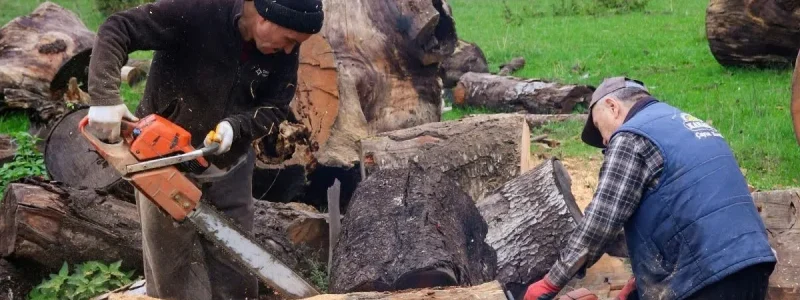
- Trunk management: trunk wood is cut down safely, often in short sections.
- Debris handling: hauling, chipping, and keeping the work area tidy throughout.
- Final sweep: cleanup matters. It is part of the job, not an extra favor.
Many homeowners also ask about stump grinding or stump removal after the tree comes down. Taking care of the stump can prevent tripping hazards, make mowing easier, and free up space for new planting.
Commercial Tree Removal That Protects People and Operations
Commercial sites have different pressures. A single damaged tree can block a drive aisle, reduce parking, or create a hazard near storefronts. For property managers and business owners, the goal is fast, safe work with clear communication.
Commercial Tree Removal Services often require:
- Work scheduling around business hours or tenant needs
- Traffic and pedestrian management in busy areas
- Coordination with maintenance teams, HOAs, or facility contacts
- Clean staging for chip trucks, loaders, and haul vehicles
- Documentation when needed for insurance claims or risk records
If a storm knocks a tree into a roadway or leaves a hanging limb above a public area, it becomes an urgent safety issue. Emergency tree removal is not just about speed. It is about making the scene stable and safe before the next gust of wind changes everything.
What “Professional Removal” Should Include
Not every tree removal quote means the same thing. When comparing options, it helps to understand what a complete service commonly covers.
Look for clarity on:
- The scope of removal (full tree, partial removal, or hazard limb removal)
- Debris removal and hauling (what stays, what goes)
- Wood handling (left as rounds, stacked, or removed)
- Stump grinding options and depth
- Site protection (lawns, irrigation lines, fences, hardscape)
- Timeline and scheduling expectations
A reputable tree removal company will explain the plan in plain language. They should also be comfortable discussing risk, because risk is the core of removal work.
Cost Drivers People Don’t Expect
Tree removal pricing is not random. It is shaped by risk and complexity.
Common factors include:
- Tree height and diameter: larger trees require more labor and more controlled cuts.
- Location: a tree over a house costs more than a tree in an open field.
- Access: narrow gates, steep slopes, or limited parking can slow a crew down.
- Condition: dead or brittle trees can be harder to rig safely.
- Disposal: hauling and dumping fees vary by volume and distance.
- Stump work: grinding adds time, equipment use, and cleanup.
If two bids are far apart, the cheaper one may be skipping key steps like full debris hauling, detailed rigging, or thorough cleanup.
After the Tree Is Gone: Smart Next Steps
Removal solves one problem, but it also changes the property. Once a tree is removed, consider:
- Backfill and grading if a stump is ground out and the area settles
- Irrigation repair if roots or equipment disturbed a line
- Soil improvement before replanting, since old root zones can be compacted
- Replacement planting with species better suited to the space, utilities, and wind load
A good long-term approach is not “remove everything.” It is keeping strong trees and removing the ones that pose the greatest risk.
A Clear Path to Safer Trees
If you are dealing with a dead tree, storm damage, or a site that needs clearance, professional Tree Removal Services can restore safety and order quickly. Residential and commercial properties have different needs, but the standard should be the same: careful planning, controlled removal, and a clean finish.
Arbor Plus is here to help you make the right call and handle the work the right way. Call 801-485-8733 to discuss your property and schedule service.